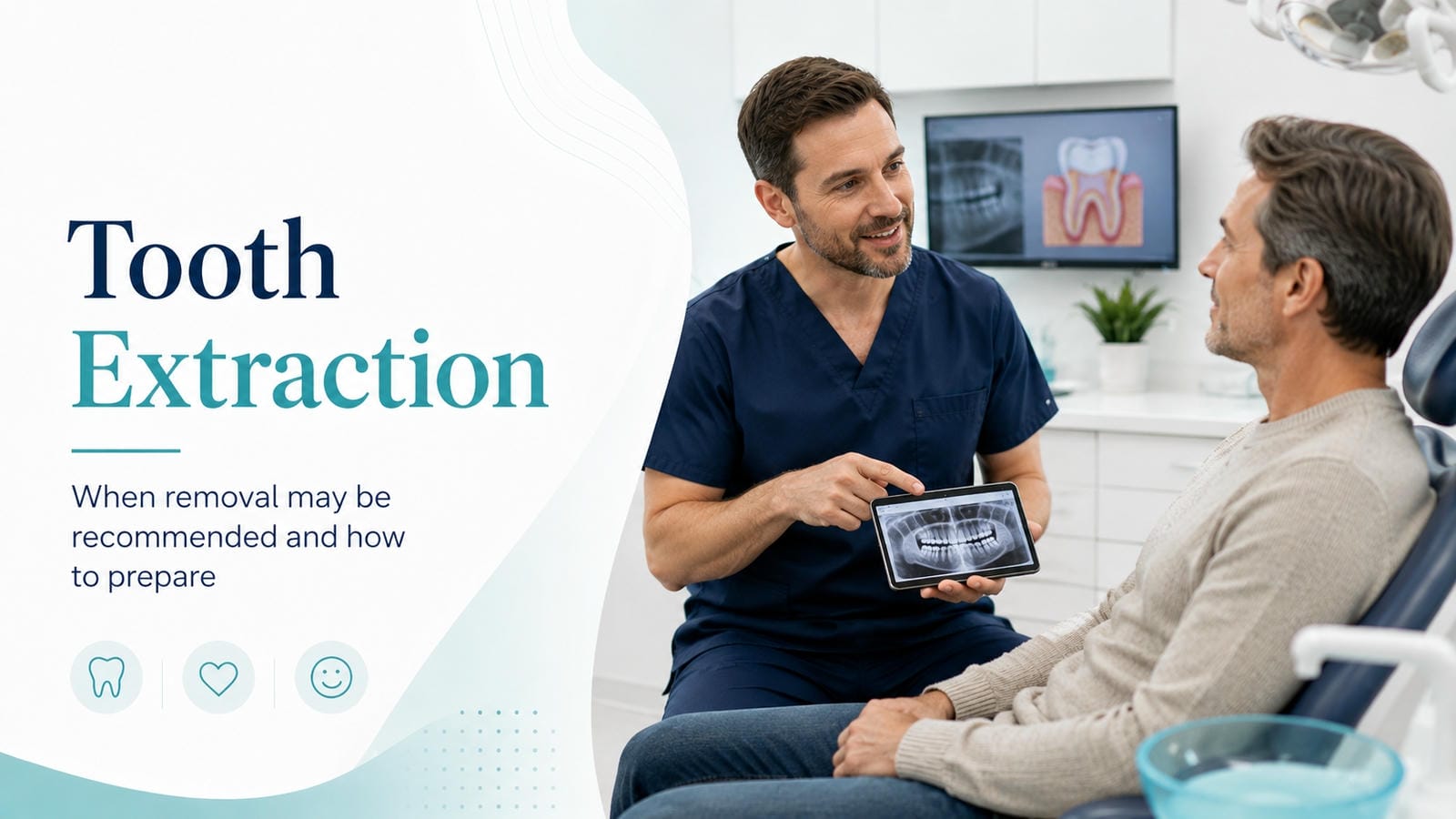
Tooth extraction means removing a tooth from its socket. It may be recommended when a tooth cannot be predictably repaired, when infection cannot be managed another way, when advanced gum disease has reduced support, or when a tooth is causing repeated problems. Extractions can also be part of orthodontic planning or denture preparation in some cases.
Although the idea of losing a tooth can feel confronting, extraction is sometimes the most appropriate option for comfort, function or long term oral health. A dentist should explain why removal is being recommended, what alternatives exist and what replacement options may be considered if the tooth is visible or important for chewing.
Why a tooth may need to be removed
A tooth may need removal if decay has destroyed too much structure for a filling or crown. It may also be removed if there is a vertical crack, a severe fracture below the gum line, recurring infection, advanced mobility or a failed restoration that cannot be repaired. Sometimes a wisdom tooth or impacted tooth may need assessment if it causes pain, infection or damage to nearby teeth.
The presence of pain alone does not always mean extraction is needed. Some painful teeth can be treated with a filling, root canal treatment, gum care or bite adjustment. This is why examination and X-rays are often required. A dentist needs to understand the cause of the problem before recommending removal.
Questions to ask before extraction
Before an extraction, patients can ask why the tooth cannot be restored, whether root canal treatment or a crown is an option, what happens if the tooth is not removed, what the recovery may involve and whether the tooth should be replaced later. It is also reasonable to ask about risks, expected appointment time and whether referral to an oral surgeon is needed.
Medical history is important. Patients should tell the dentist about medications, allergies, pregnancy, bleeding disorders, heart conditions, artificial joints, immune system concerns, bisphosphonate medication, cancer treatment, previous difficult extractions and any history of complications after dental procedures. This information can affect planning and aftercare.
What happens during a simple extraction
For many extractions, local anaesthetic is used to numb the tooth and surrounding gum. The dentist then loosens the tooth and removes it with dental instruments. Patients may feel pressure or movement, but they should tell the dentist if they feel sharp pain. A gauze pack is usually placed afterwards to help a clot form.
Some teeth are more complex to remove. A tooth may have curved roots, be broken down, be close to important structures or be impacted beneath the gum. In these cases, the dentist may discuss a surgical extraction or referral. The safest approach depends on the tooth and the patient’s health.
The first day after extraction
The first day is focused on protecting the blood clot in the socket. The clot is part of normal healing. Patients are often advised to bite gently on gauze as directed, avoid vigorous rinsing, avoid smoking, avoid drinking through a straw and avoid heavy exercise for a period recommended by the dentist. These instructions can vary based on the procedure, so the specific advice provided by the clinic should be followed.
Numbness can last for a few hours. It is important to avoid chewing the cheek, lip or tongue while the anaesthetic is still active. Eating soft foods and drinking water may be easier at first. Hot drinks and hard foods may need to be avoided immediately after the appointment, depending on the dentist’s instructions.
Normal healing and warning signs
Some tenderness, mild swelling or light bleeding can occur after an extraction. Discomfort should generally be manageable with the advice provided by the dentist. If bleeding does not settle, pain becomes severe, swelling increases, there is fever, a bad taste, pus, difficulty swallowing or difficulty breathing, urgent advice should be sought.
A painful condition called dry socket can occur when the blood clot is lost or does not form properly. This can expose the bone and cause significant pain, often a few days after the extraction. Dry socket needs dental care. It is not something to ignore or try to manage with home remedies alone.
Replacing a missing tooth
Not every extracted tooth needs immediate replacement, but replacement should be discussed. A missing back tooth may affect chewing. A missing visible tooth may affect confidence and speech. Neighbouring teeth can sometimes drift into the space over time, and the opposing tooth may change position. Replacement options may include a denture, bridge or dental implant, depending on suitability.
The best time to discuss replacement is often before the tooth is removed. In some cases, planning ahead can preserve more options. For example, if an implant may be considered later, the dentist may discuss bone preservation or referral. However, implants are not suitable for everyone and involve their own assessment, risks and maintenance.
Wisdom teeth and extraction
Wisdom teeth are not automatically removed simply because they exist. A dentist may monitor them if they are healthy, cleanable and not affecting nearby teeth. Removal may be considered if they are repeatedly infected, decayed, causing gum problems, damaging neighbouring teeth or unlikely to erupt into a useful position.
Wisdom tooth removal can be more complex than other extractions, particularly if the roots are close to nerves or the tooth is deeply impacted. X-rays and sometimes three dimensional imaging may be considered depending on the case.
Emotional concerns about losing a tooth
Many people feel embarrassed or upset when a tooth needs removal. This is understandable. Teeth are part of eating, speaking and appearance, and losing one can feel personal. A supportive dental discussion should focus on what is clinically appropriate and what options exist from here, not on blame.
Sometimes removing a severely damaged tooth can be the first step toward improving comfort. For others, it may be part of a larger plan to restore chewing or replace missing teeth. The important thing is that the patient understands the reason for removal and the next steps available.
Final thoughts
Tooth extraction may be recommended when a tooth cannot be predictably repaired or when keeping it may create ongoing problems. Preparation, clear questions and careful aftercare can help patients understand the process and recovery. This article is general information only and should not replace advice from a dental practitioner who has assessed your individual situation.
For personalised advice about a damaged, painful or infected tooth, contact Bittern Dental for an assessment.